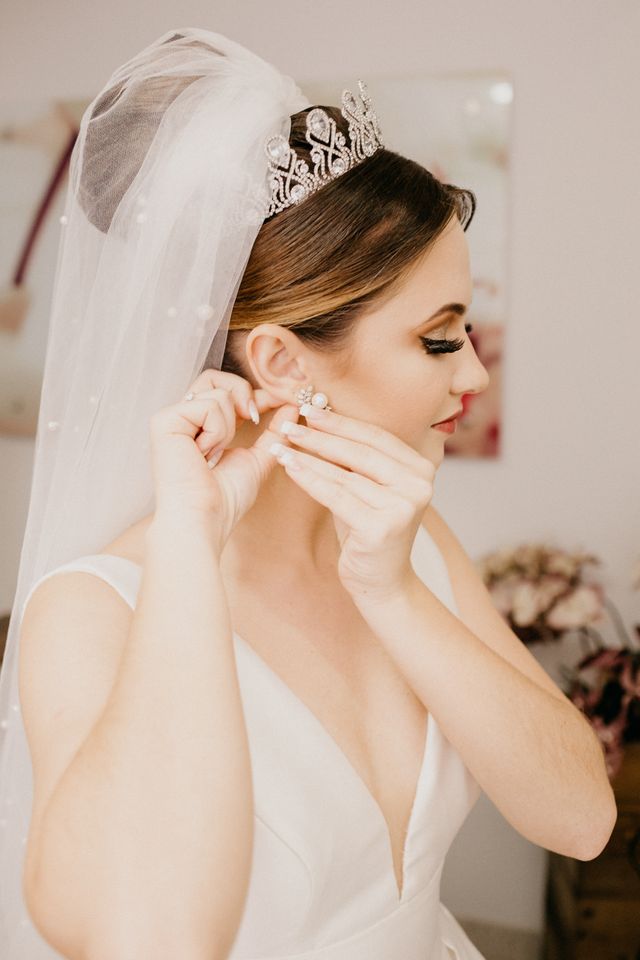


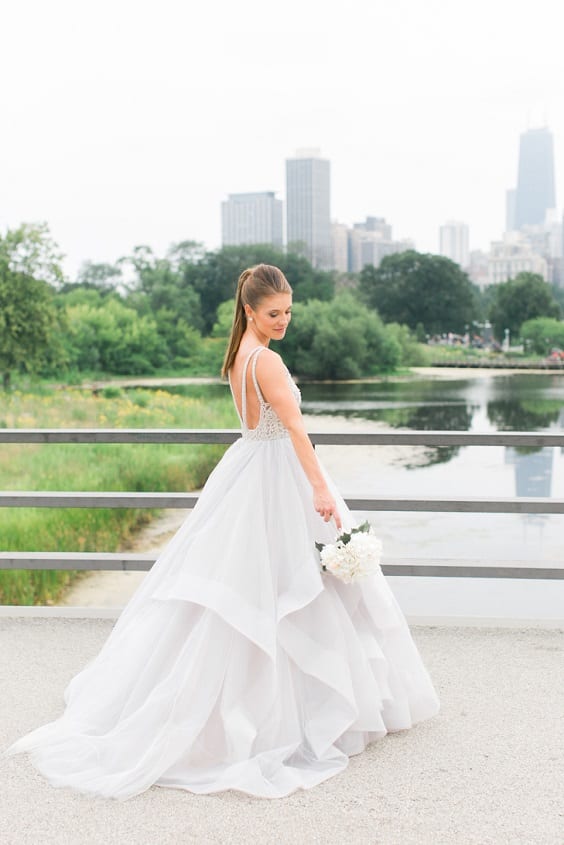



The contemporary bride has quietly rewritten the brief. She wants a gown that looks like fashion, not costume; that can be worn as separates or restyled after the day; that was made thoughtfully and ideally sustainably. A generation of designers has built entire houses around that shift, trading meringue silhouettes for bias-cut slips, architectural tailoring, and interchangeable pieces. These are the twelve doing it most convincingly in 2026.
This guide profiles each house, what it is reinventing, and where its approach has trade-offs, so a modern bride can find the one that fits how she actually wants to dress.
The 12 Contemporary Bridal Designers at a Glance
| Designer | Location | Starting Price | Best Known For |
| 1. Danielle Frankel | New York and Los Angeles | From $3,950 | Directional design backed by a full in-house atelier |
| 2. Amsale | SoHo, New York | On request | The original modern minimalist wedding dress |
| 3. Elizabeth Fillmore | Chelsea, New York | On request | Bias-cut gowns and silk separates made in NYC |
| 4. Mira Zwillinger | Tel Aviv, plus stockists | On request | Ethereal made-to-measure with remote fitting |
| 5. Dana Harel | Tel Aviv, plus stockists | On request | Sculptural, fashion-forward gowns |
| 6. Galvan London | London | On request | Minimalist bias-cut slips and modern separates |
| 7. Rime Arodaky | Paris and New York | On request | Cool, boundary-pushing Parisian bridal |
| 8. Costarellos | Greece, plus stockists | On request | Ethereal, Greek-inspired neo-romance |
| 9. Cortana | Barcelona, Madrid, Mallorca | On request | Minimalist, slow-fashion gowns in natural fabrics |
| 10. Made With Love | Australia, plus stockists | On request | Body-skimming crepe gowns with customisation |
| 11. Halfpenny London | London | From £4,000 | Interchangeable bridal separates and bespoke looks |
| 12. Rita Vinieris | New York, via boutiques | On request | Fluid, architectural “simple luxury” |
1. Danielle Frankel
Plenty of labels claim to be reinventing bridal. Danielle Frankel does it with a working atelier behind the vision, ensuring every design is supported by the craftsmanship and expertise required to bring that vision to life. Every gown is designed, patterned, and constructed by hand in New York City’s Garment District, and the house pairs that craft with a design language that reads as fashion first: sculptural pleating, dip-dyed ombrés, and woven silk-and-metal textiles. Brides can engage at any level, from made-to-order and customisation to a fully custom gown developed with the atelier, with in-person and online consultations available at the New York studio on West 39th Street and the Los Angeles boutique on Melrose Place.
- Designed, patterned, and constructed by hand in New York City’s Garment District
- Two boutiques: the New York studio and the Los Angeles boutique on Melrose Place
- Made-to-order, customisation, and full custom all offered directly by the house
- Made-to-order pricing published openly by style, with custom quoted at consultation
- Video consultations for brides outside both cities, with fittings at the atelier
- A directional, modern aesthetic anchored by genuine couture construction
- Worn by Telsha Anderson, Charli XCX and Abby Champion
Visit Danielle Frankel
2. Amsale
The New York house often credited with inventing the modern minimalist wedding dress, Amsale still builds its gowns with couture dressmaking techniques in its NYC atelier, now from a SoHo flagship.
- Gowns made using couture techniques in the New York atelier
- A SoHo flagship and a clean, proportion-led design philosophy
- A historic legacy as a founder of the pared-back bridal movement
- The clean aesthetic can read as safe rather than boundary-pushing
- The founder passed in 2018, and the house is now guided by a design team
Visit Amsale
3. Elizabeth Fillmore
A New York designer working from a Chelsea atelier, Elizabeth Fillmore makes modern-romantic gowns and silk separates by hand in the city, from ceremony looks to afterparty pieces.
- Each gown designed, draped, and finished by hand in the NYC atelier
- Custom patterns cut in-house, with two to three fittings
- A cool, fashion-led sensibility spanning gowns and separates
- A small atelier with limited stockists, so access is concentrated in a few cities
- The relaxed, modern register suits some brides more than those after grandeur
Visit Elizabeth Fillmore
4. Mira Zwillinger
A Tel Aviv couture house led by a mother-daughter team, Mira Zwillinger is known for ethereal, made-to-measure gowns and a signature technique that fits a bride remotely.
- Made-to-measure couture handcrafted in the Tel Aviv atelier
- A hand-carved mannequin process that allows precise fit even at a distance
- Contemporary silhouettes layered with delicate, intricate detailing
- Available only through high-end boutiques worldwide rather than direct retail
- The ethereal, embellished signature is less suited to strictly minimalist brides
Visit Mira Zwillinger
5. Dana Harel
A Tel Aviv designer launched in 2012, Dana Harel produces sculptural, fashion-forward gowns crafted entirely in-house, favoured by brides who want something distinctly modern.
- Every gown made in-house in the Tel Aviv atelier
- A sculptural, avant-garde approach using unexpected materials and textures
- A genuinely contemporary point of view that avoids fleeting trends
- Reaches international brides mainly through stockists and trunk shows
- The artful, detailed aesthetic is not aimed at brides wanting pure simplicity
Visit Dana Harel
6. Galvan London
A London house founded in 2014, Galvan reset modern bridal around the bias-cut slip dress, channelling 1990s minimalism into versatile, ready-to-wear-led pieces.
- Minimalist slip dresses, separates, and jumpsuits designed for repeat wear
- A focus on clean lines, fluid fabrics, and accessible luxury pricing
- A conscious, locally produced approach to its collections
- A ready-to-wear model rather than a made-to-measure couture commission
- The pared-back slip focus offers little for brides wanting structure or volume
Visit Galvan London
7. Rime Arodaky
A Paris house launched around 2010, Rime Arodaky broke from tradition with cool, sensual, separates-led bridal designed for the independent modern bride, with showrooms in Paris and New York.
- Custom-made in France with a distinctly Parisian, fashion-led attitude
- Modern separates and bodysuits alongside full gowns
- Showrooms in both Paris and New York
- The edgy, sometimes sheer register is a deliberate break from classic bridal
- Access outside Paris and New York runs through stockists
Visit Rime Arodaky
8. Costarellos
A Greek house led by Christos Costarellos, the label is known for ethereal, neo-romantic gowns that blur the line between bridal and ready-to-wear, with a focus on sustainable production.
- Refined lacework and airy fabrics inspired by Greek craft traditions
- A crossover sensibility that makes pieces wearable beyond the wedding
- A stated commitment to sustainable, locally crafted production
- Sold largely online and through stockists rather than a bridal flagship network
- The soft, romantic register is less suited to brides after sharp modern lines
Visit Costarellos
9. Cortana
A Spanish house founded in 2001 by Rosa Esteva, Cortana builds quietly modern gowns from natural fabrics on a slow-fashion model, with stores in Barcelona, Madrid, and Mallorca.
- Minimalist, draped designs that avoid heavy beading or embellishment
- Natural, renewable fabrics and a considered, slow-fashion ethos
- Three Spanish stores plus a selection of international stockists
- The understated, relaxed aesthetic is narrow for brides wanting drama
- US brides generally access the collection through partner boutiques
Visit Cortana
10. Made With Love
An Australian label founded in 2013, Made With Love (now styled MWL) built a global following on body-skimming crepe gowns with daring necklines, and offers a made-to-measure customisation service.
- Modern, figure-skimming silhouettes in luxe French crepe and lace
- A made-to-measure customisation service through its own production house
- Accessible pricing relative to the couture end of the market
- A sexy, contemporary register rather than a traditional or formal one
- Sold through global stockists rather than a couture atelier experience
Visit Made With Love
11. Halfpenny London
Founded in 2005 by Kate Halfpenny, this London house reframed bridal around interchangeable separates, letting brides build a personal look from dresses, skirts, tops, and capes.
- Interchangeable separates that can be styled and layered into a unique look
- A bespoke service designing gowns from scratch in the London atelier
- British-made pieces with inclusive sizing across the collection
- Complete looks start from around £4,000, building up with added pieces
- The relaxed, separates-led approach is a departure from a single formal gown
Visit Halfpenny London
12. Rita Vinieris
A New York designer behind the Rivini and Alyne labels, Rita Vinieris is known for fluid, architectural gowns built on a philosophy of simple luxury and low-key ornamentation.
- Couture-level construction with a focus on fluid, sculptural silhouettes
- A restrained, modern sensibility she calls simple luxury
- Two distinct lines covering different moods and price points
- Sold through boutiques and trunk shows rather than a direct flagship
- The two-label structure can make the brand harder to place at a glance
Visit Rita Vinieris
What “Redefining Bridal” Actually Looks Like in 2026
The houses reshaping the category tend to share a few traits that a forward-thinking bride can look for:
- Versatility built in. Separates, convertible pieces, and gowns designed for repeat wear reflect a bride who does not want a dress worn once and boxed forever.
- Restraint over ornament. Much of the modern movement is about subtraction, letting cut, fabric, and proportion carry the gown rather than beadwork.
- Fashion crossover. The most contemporary houses blur bridal and ready-to-wear, so the gown reads as a fashion choice rather than a bridal uniform.
- Considered production. Sustainability, local manufacturing, and small-batch craft increasingly sit at the centre of a modern label’s identity.
- A real atelier behind the look. The strongest of these houses pair a directional aesthetic with genuine in-house construction, which is what keeps modern from tipping into merely trendy.
Frequently Asked Questions
What makes a bridal designer contemporary rather than traditional?
Contemporary bridal prioritises a fashion-led point of view over convention. In practice that means clean or architectural silhouettes, separates and convertible pieces, modern fabrics, and often a sustainability focus, designed so the gown reads as current rather than timeless-by-formula. Traditional houses lean on established silhouettes and ornament, while contemporary designers treat the wedding dress as a piece of fashion.
Are contemporary wedding dresses cheaper than couture gowns?
Sometimes, but not always. Ready-to-wear-led contemporary labels can offer lower entry points than full couture, since gowns are produced in standard sizes rather than built from scratch. Others, particularly the made-to-measure ateliers, sit firmly at couture prices. The model matters more than the label: a made-to-order or custom gown will generally cost more than a ready-to-wear slip dress.
Can I buy bridal separates instead of a single gown?
Yes, and several houses are built around exactly that. Separates let a bride combine a top, skirt, overskirt, or cape into a look that is genuinely her own, and often restyle pieces for wear after the wedding. It is one of the clearest ways the contemporary movement has moved away from the single, single-use gown.
Which contemporary designers are based in New York?
Among this group, Danielle Frankel, Amsale, Elizabeth Fillmore, and Rita Vinieris are New York houses, with Rime Arodaky also running a New York showroom alongside Paris. Danielle Frankel additionally operates a Los Angeles boutique on Melrose Place and constructs every gown in its own New York City atelier, which is unusual even among this fashion-forward group.
How do I buy from an international contemporary designer?
Houses based in Tel Aviv, London, Paris, Greece, Spain, or Australia typically reach brides elsewhere through stockists, trunk shows, or online ordering, with some offering remote made-to-measure. Before committing, confirm whether fittings happen locally through a partner boutique or require travel to the home atelier, since this varies significantly between labels.
Are contemporary wedding dresses more sustainable?
Many contemporary houses do place sustainability at the centre of their model, using natural or renewable fabrics, local production, and small-batch or made-to-order manufacturing that reduces waste. It is not automatic, though. If sustainability matters to you, it is worth asking a specific house about where and how its gowns are made rather than assuming a modern aesthetic guarantees a low footprint.
Written by: Sagar Chawla