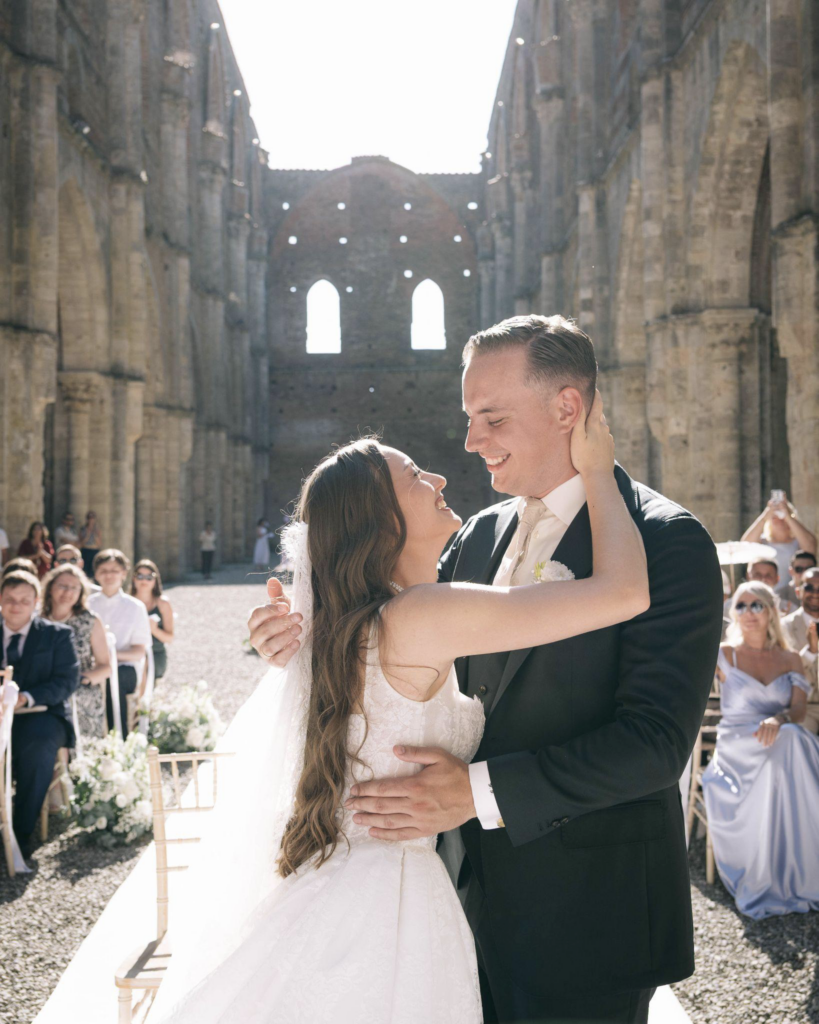






When couples get engaged, they often go through a lot of changes in their lives. Many couples get engaged while still trying to switch careers or chase a promotion. Couples who treat their engagement as the only thing going on in their lives may find themselves feeling drained after the whole wedding-planning process. In contrast, couples that consider their other goals as essential as planning the wedding seem to come out of engagement happy and fulfilled.
So, what does the balance look like?
Treat It Like Two Projects Running at Once
It helps to name both things explicitly early on: there’s the wedding, with its own timeline and milestones, and there’s whatever each partner is working toward professionally or academically, with its own deadlines and demands. When only the wedding gets a plan, it tends to expand to fill every evening and weekend, quietly pushing everything else to the margins. Giving the other project equal billing, even informally, makes it much easier to protect time for it later.
Talk About Individual Goals Before Merging Routines
Before schedules start blending completely, it’s worth having a direct conversation about what each partner actually wants to accomplish over the next year or two, separate from anything wedding-related. One person might be angling for a leadership role at work, another might be circling back to finish a degree they paused years ago. Naming these goals out loud, rather than assuming they’ll happen naturally once things calm down, keeps them from getting shelved by accident during a busy engagement.
Making Room for Further Education
For some couples, the engagement period turns out to be a surprisingly good window to pursue further education rather than a reason to postpone it. A partner who’s been considering going back to school might find that this is actually a reasonable stretch to study for an MBA online, since flexible, self-paced coursework can move alongside wedding planning instead of competing with it for the same fixed hours. The same logic applies whether someone is finishing an undergraduate degree, working through a bachelor’s program part-time, or eyeing a master’s down the line. The format matters more than the timing, since it determines whether schoolwork has to happen during rigid blocks or can flex around cake tastings and guest list arguments.
That flexibility tends to matter most in the smaller, unpredictable moments. A vendor call that runs long or a last-minute dress fitting doesn’t have to derail an entire week of coursework when the program itself was built to accommodate a schedule that shifts, whether that’s an online MBA, a bachelor’s completion track, or graduate-level classes taken part-time alongside a full-time job.
A few things that make this easier in practice:
● Block out recurring study or coursework time on a shared calendar the same way you’d block off a venue walkthrough, so it’s treated as fixed rather than optional.
● Tell vendors and wedding party members up front about any hard deadlines on the school or work side, so scheduling requests don’t quietly collide.
● Revisit the balance every few weeks, since wedding planning tends to get more intense as the date approaches, and coursework or work deadlines don’t pause to make room for it.
Divide the Mental Load, Not Just the Tasks
Wedding planning and coursework or career pushes both come with a layer of invisible admin, tracking vendor emails, remembering assignment deadlines, keeping track of what’s been paid for versus what still needs a decision. It’s easy for one partner to end up managing most of it simply because they noticed it first.
Sitting down and explicitly assigning ownership, vendor calls to one person, study blocks protected for the other, keeps the load from settling unevenly on one partner’s shoulders.
Protect Time That Belongs to Neither Project
Somewhere in the middle of wedding logistics and school or career deadlines, it’s worth carving out time that isn’t about either one. A dinner where the wedding binder stays closed and the laptop stays shut, goes a long way toward remembering that the relationship is the actual point, not the sum of two overlapping projects. Couples who skip this step often find that by the time the wedding arrives, they’ve spent months managing logistics together without much room left for anything else.
Building a Foundation, Not Just a Countdown
An engagement built around shared ambition, rather than treated purely as a countdown to one day, tends to set a stronger foundation for the marriage that follows. Couples who protect space for each other’s goals during this stretch, whether that’s a career move, finishing a degree, or working through an online MBA program, come out the other side having practiced something they’ll need for the rest of the marriage: making room for two people’s ambitions at the same time, without either one quietly disappearing.
Written by: Antoine Fischer