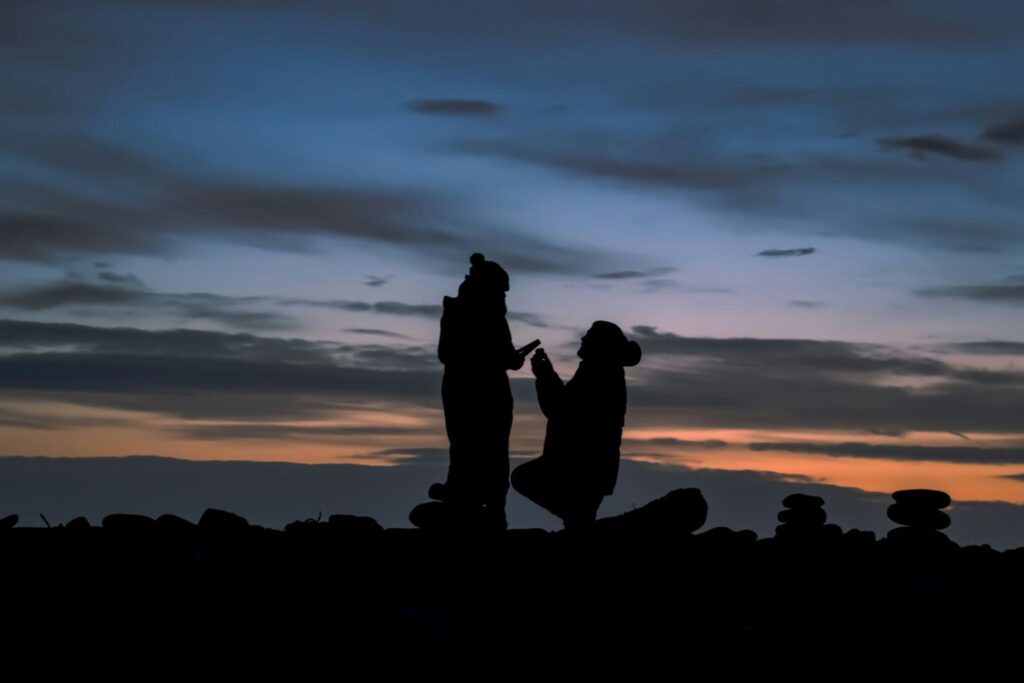



There is a particular kind of excitement that comes with planning a proposal in another country. You may already know the answer you hope to hear. You may have chosen the ring and imagined the expression on your partner’s face. Yet between that vision and the actual moment sits a long list of practical decisions: where it will happen, who will be there, how the flowers will arrive, whether the light will be right, and how to get your partner to the location without raising suspicion.
Morocco lends itself naturally to romance. The country offers intimate riad courtyards, Atlantic views, tiled terraces, private gardens, elegant hotels, and rooftops that change completely as the sun begins to set. Still, a memorable proposal is rarely the result of choosing the most dramatic setting available. It comes from creating an atmosphere that reflects the relationship and handling the logistics so quietly that the person being surprised never sees the work behind it.
Planning from abroad adds complexity, but it also gives you time to be deliberate. With the right local coordination, a clear sense of what suits your partner, and enough flexibility for the unexpected, the distance does not have to diminish the experience.
Begin With How You Want the Moment to Feel
Before contacting venues or choosing a floral design, decide what kind of memory you want to create.
Some couples would love a candlelit setup, a musician nearby, and a photographer waiting discreetly for the exact moment. Others would feel far more comfortable with a quiet dinner, a bouquet on the table, and no audience at all. The difference matters. A proposal that looks impressive in photographs can still feel wrong if it places your partner in a situation they would never have chosen for themselves.
Think about how they respond to attention. Do they enjoy being celebrated publicly, or do they become self-conscious when a room turns toward them? Would they appreciate an elaborate installation, or would a private terrace with a handwritten letter feel more sincere?
Details from your relationship can help answer those questions. A flower they always notice, a song from an early date, a color they wear often, or a reference to a shared trip can give the proposal its identity. Even a simple design feels considered when it carries a reason.
Imagine, for example, a quiet terrace in Rabat just before sunset. There is no large arch and no crowd. A small arrangement sits beside the table, the photographer is positioned far enough away not to be noticed, and the music playing in the background is the same song you listened to on your first trip together. Nothing is excessive, but every element belongs to the couple.
That sense of recognition is more valuable than spectacle.
Choose a Setting That Suits the Relationship
Morocco offers very different proposal environments, and each comes with its own advantages.
A riad courtyard creates privacy almost instantly. Enclosed walls, tiled floors, plants, lanterns, and soft evening light can provide enough character that the space requires only a few additions. This works especially well for someone who would prefer an intimate moment away from strangers.
A rooftop offers a more open and energetic atmosphere. In cities such as Rabat, Casablanca, or Marrakech, the transition from late afternoon to evening can become part of the experience. Rooftops are especially effective when the proposal is followed by dinner, but timing needs to be precise. Arriving too early may expose the setup; arriving too late may mean losing the light.
Gardens offer a softer visual style. They pair naturally with seasonal flowers, candles, a simple table, or a short floral aisle. Access, lighting, and weather should be discussed in advance, particularly if the setting is open to the public.
Morocco’s Atlantic coast can also create an unforgettable scene. The sound of the water and the open horizon need very little decoration. The practical side, however, requires attention. Wind can affect candles, petals, fabric, sound equipment, and photography. Public access may also limit what can be installed.
Hotels are often the easiest option for someone planning remotely. A hotel team can receive deliveries, communicate with vendors, direct the recipient, and preserve the surprise. A private dining room, suite, garden corner, or terrace may not sound as adventurous as a remote outdoor location. Still, reliability has its own value when several moving parts must come together.
Rabat is particularly suited to proposals that feel refined without becoming overly theatrical. Its coastal atmosphere, quieter gardens, elegant neighborhoods, hotels, and terraces provide options for couples who want romance with a sense of calm.
Wherever you choose, ask the venue-specific questions before confirming. How early can vendors enter? Are candles permitted? Is music allowed? Can flowers be delivered in advance? Is there a private indoor alternative if the weather changes? A setting should be selected not only for how it looks, but for how well it can support the plan.
Build a Reliable Local Team
When arranging a proposal from another country, the quality of local communication matters as much as the creative idea.
Choose one person to act as the central point of contact. This may be a proposal planner, venue manager, trusted friend, family member, or experienced vendor. That person should understand the full timeline and be able to make small decisions without waiting for approval across time zones.
Avoid coordinating every supplier separately if you can. When the florist, photographer, musician, driver, and venue are all receiving different instructions, details can easily become inconsistent. A single written plan should include arrival times, contact numbers, addresses, responsibilities, payment status, and the order in which the setup will happen.
Share visual references, but explain what you like about them. Instead of sending a photograph and asking for an exact copy, identify the elements that matter: the color palette, the level of fullness, the style of wrapping, the mood, or the type of lighting. Local availability, venue dimensions, and seasonal conditions may require adjustments.
Language should also be considered. Confirm whether your main contact is comfortable communicating in the language you use and whether instructions need to be shared in French, Arabic, or English with other vendors.
Ask for progress updates, but avoid requesting approval for every minor detail on the day itself. The goal is to work with people whose judgment you trust. Too many last-minute messages can slow the setup and create confusion when the team needs to work quickly.
Let the Flowers Support the Setting
Flowers can define the atmosphere of a proposal, but they do not need to dominate the entire space.
Red roses remain the classic romantic choice, especially for a formal or dramatic setup. White and ivory arrangements feel quieter and more architectural. Blush, peach, and muted pink tones create warmth and work well in gardens, hotel suites, and riad courtyards. Seasonal mixed flowers can make the design feel less predictable and more connected to the setting.
The scale should be guided by the venue. A large floral arch can be effective on a spacious terrace or in an open garden, where it helps frame the proposal area. In a smaller room, the same installation may feel crowded. A carefully arranged bouquet, a few low floral pieces, and restrained petal placement may be more elegant.
For a proposal planned from overseas, sourcing flowers locally is usually more practical than attempting to ship anything internationally. A Rabat-based service such as Flowers Rabat can coordinate local preparation and delivery with a hotel, venue, planner, or recipient, depending on how the proposal is being organized.
Be realistic about flower availability. A reference image may feature a variety that is out of season or difficult to source locally on the required date. Rather than insisting on an exact match, agree on the overall palette, shape, and style. A skilled florist should be able to recommend substitutions without changing the character of the design.
Think about what happens to the bouquet afterward as well. If the proposal takes place at a restaurant, rooftop, or garden, arrange for the flowers to be moved to the hotel or home after the photographs. That small piece of planning allows the bouquet to remain part of the celebration rather than being left behind at the venue.
Protect the Surprise With a Realistic Timeline
Getting your partner to the location without making them suspicious requires a reason that feels ordinary.
A dinner reservation, family invitation, sightseeing plan, hotel experience, or celebration for another occasion can all work. The explanation should fit your normal relationship. Complicated stories involving several people are harder to maintain and more likely to create tension.
You may also need to guide what your partner wears without revealing too much. Mentioning a restaurant dress code, a planned photo, or a special evening can help. Consider the location carefully: heels may not be suitable for a garden path or coastal walkway, and a long outdoor wait may be uncomfortable in changing weather.
Plan the proposal timeline backward from the moment you want to ask the question. For a sunset proposal, confirm the local sunset time for the exact date rather than relying on a general estimate. Allow enough time for delays without requiring your partner to arrive so early that the setup is still visible.
A practical schedule might include venue access, flower delivery, photographer arrival, sound and lighting checks, your own arrival, and the recipient’s arrival. Each stage should have a buffer. Local traffic, hotel procedures, weather, and changes in the recipient’s day can all affect timing.
A ten- or fifteen-minute delay should not ruin the plan. The photographer should know where to reposition. The venue should understand whether to hold the recipient briefly. The music should not begin at a fixed time if the couple has not yet arrived.
Discretion also applies to communication. Ask vendors not to call the recipient unless it is part of the plan. Please confirm which phone number to use on the day, and ensure notifications, shared calendars, or visible email previews will not reveal the arrangement.
Plan What You Will Say and What Happens After
It is easy to devote weeks to the setting and very little time to the words.
You do not need a long speech. In fact, memorizing several paragraphs can make the moment feel rehearsed and create unnecessary pressure. Prepare a few points instead: what you admire about your partner, a memory that represents your relationship, and why you want to share your future with them.
Speak slowly. Leave space between the words. Do not rush through the question because the photographer is waiting or the music has reached a certain point. The proposal exists for the two people involved; everything else is there to support it.
A handwritten note can be included, but it should not replace what you say. The card might carry one sentence, a date, or a private reference. The more important message should come directly from you.
Consider how you want the minutes after the proposal to feel. Some couples need quiet before calling anyone. Others want family nearby, ready to join once the answer is given. You could arrange a private dinner, a small dessert, a video call with relatives, or a later gathering at the hotel.
Avoid turning the first half hour into a continuous photo session. Capture the moment, take a few portraits, and then allow yourselves to experience what has just happened.
One realistic scenario might be a proposal in a private riad courtyard. Your partner believes you are arriving for dinner. A photographer is positioned behind an upper-level screen, the flowers are placed low around the table rather than forming a large installation, and close family members are waiting in a separate room. After the proposal, the two of you have fifteen minutes alone before everyone joins. The plan still feels celebratory, but the most intimate part remains private.
Prepare for Changes Without Losing the Mood
A backup plan is not a sign that the proposal is poorly organized. It is what allows the proposal to remain calm when something does not happen exactly as expected.
For any outdoor location, confirm an indoor alternative. If strong wind makes an elaborate floral setup impossible, decide in advance which arrangements are essential and which can be removed. If a musician becomes unavailable, have a prepared playlist. If the photographer is delayed, identify someone who can record discreetly without stepping into the scene.
Keep digital copies of reservations, receipts, contact numbers, the venue address, and the final timeline. Share them with the local coordinator. If you are traveling with the ring, keep it in your hand luggage rather than checked baggage.
Most importantly, do not let a minor change make you feel that the proposal has failed. A shifted table, a different flower variety, or a later sunset arrival will not be what your partner remembers. They will remember the expression on your face, the words you chose, and the feeling of realizing that the evening had been created for them.
Planning a proposal in Morocco from abroad requires trust, coordination, and restraint. Once the right people are in place and the practical details have been handled, the best thing you can do is step into the moment and be fully present. The setting may frame the memory, but the connection between you is what gives it meaning.
Written by: F.R