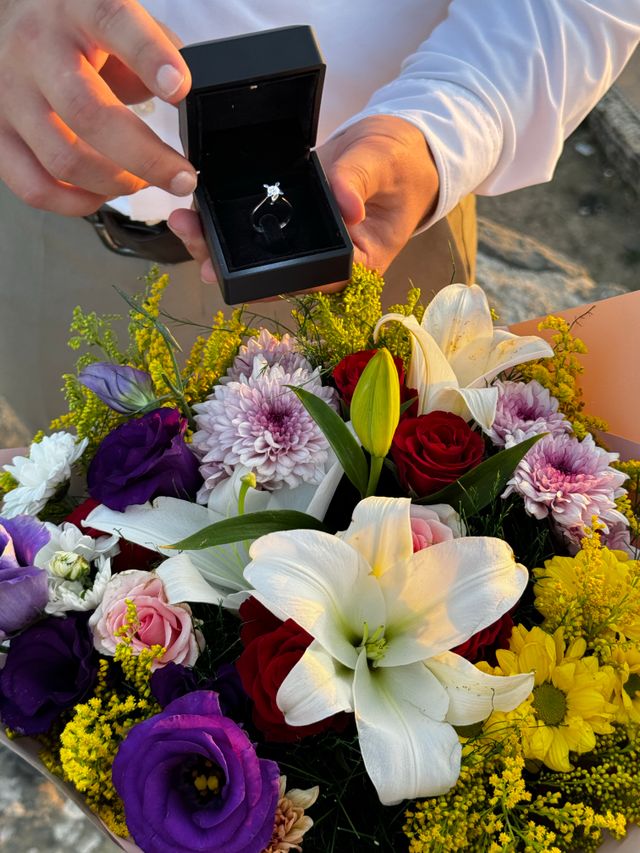






The proposal is over. The ring is on your finger. You’ve called your parents, posted the photo, and probably already started a Pinterest board or two.
It’s a fun season — engagement is one of those milestones you dream about for years, so it makes total sense to want to soak it all in and start planning the perfect day. Every couple deserves to enjoy this part. The excitement is real, and it should be.
But somewhere between picking a venue and tasting cake flavors, there’s a bigger opportunity waiting for you. And it’s easy to miss it, because it’s quieter than wedding planning and doesn’t come with a checklist app or a Pinterest board of its own.
Before you lock in florists or finalize the guest list, take some time to prepare for the thing that actually matters most: your marriage.
The strongest marriages aren’t the ones that happened to get lucky. They’re the ones that started with honest, sometimes uncomfortable, conversations before the wedding day ever arrived. The couples who do this well aren’t necessarily more compatible than everyone else — they’ve just done the work of actually talking about the things most people wait to figure out until they’re already living them.
Wedding Planning Is About an Event. Marriage Prep Is About a Life.
Wedding planning comes with a natural to-do list:
- Book the venue
- Choose a photographer
- Send the invites
- Plan the honeymoon
All of that matters. It’s how you create a day you’ll actually remember.
But marriage asks something different of you. Instead of “what colors should we go with,” the better question is: how do we actually make decisions together? Instead of arguing over the seating chart, talk about how you handle conflict when it’s just the two of you. Instead of comparing honeymoon destinations, compare what you each expect married life to look like five, ten, twenty years from now.
These are the conversations that quietly determine whether a marriage thrives — and they almost never happen by accident. You have to make room for them, on purpose, the same way you made room for engagement photos or cake tastings.
Why These Conversations Are Easy to Skip
Here’s the honest truth: most couples don’t skip these conversations because they don’t care. They skip them because wedding planning is loud. It has deadlines, vendors, and a date on the calendar pulling everyone’s attention. Marriage prep has none of that urgency, so it’s easy to tell yourselves you’ll “get to it eventually.”
The problem is that “eventually” often turns into the first real argument about money, or the first holiday season where you disagree about whose family gets which day, or the first year of marriage when you realize you never actually talked about whether you both want kids right away. None of that means the relationship is in trouble. It just means the conversation got skipped, and now it’s happening under pressure instead of on your own terms.
That’s the real value of doing this now, while you’re engaged: you get to have these conversations with curiosity instead of crisis.
7 Conversations Every Engaged Couple Should Have Before the Wedding
1. What do we actually want our marriage to look like?
Everyone walks into marriage with a picture in their head of what it’s “supposed” to be — usually shaped by their own family, whether that’s something to repeat or something to avoid. Talk openly about what a healthy, thriving marriage looks like to each of you. Get specific: priorities, traditions, the day-to-day rhythm you want your life together to have.
2. How do we handle conflict — really?
Every couple disagrees. That’s not a red flag; it’s just marriage. What separates strong marriages from struggling ones isn’t the absence of conflict, it’s how couples move through it — with humility, respect, and honesty instead of silence or blame.
It helps to talk about how conflict was handled in the homes you each grew up in, and be honest about what you want to carry forward and what you want to leave behind.
3. How are we going to manage money together?
Money conversations aren’t really about spreadsheets — they’re about values, security, generosity, and what you’re both building toward. Before you’re navigating real bills and real stress, talk through:
- Budgeting
- Existing debt
- Savings goals
- Giving and generosity
- Financial priorities
It’s a much easier conversation to have now, before it’s tied to a real decision under pressure.
4. What role will faith play in our marriage?
For couples who share a faith, engagement is the perfect window to talk through how that faith will actually shape daily life together. How will you pray together? How will faith inform the way you make decisions as a couple? What part will church and community play in your life?
Shared convictions get stronger the more intentionally you live them out — and that starts with actually talking about them.
5. What expectations are we bringing into this?
Most disappointment in marriage doesn’t come from bad intentions. It comes from expectations that were never actually said out loud. Get specific and get honest about things like:
- Household responsibilities
- Time with extended family
- Careers and ambitions
- Kids (if, when, how many)
- Personal space and alone time
- Traditions worth keeping
You don’t need to agree on everything. You just need clarity, so nothing catches either of you off guard later.
6. What are we building, together?
Every marriage benefits from a shared sense of direction. Ask each other:
- What kind of home do we want to create?
- What values matter most to us?
- What do we want people to feel when they’re around us?
- What kind of legacy do we want to leave?
When you’re both working toward the same picture, the smaller day-to-day decisions get a lot easier to make.
7. How will we keep growing after the wedding?
The wedding is the beginning, not the finish line. Talk now about how you’ll keep investing in each other long after the honeymoon ends — through regular check-ins, shared experiences, healthy habits, and a willingness to ask for outside help when you need it.
Strong marriages aren’t built in a day. They’re built over decades, one honest conversation at a time.
You Don’t Have to Have These Conversations Alone
Reading through a list like this is one thing. Actually sitting down and working through all seven conversations, in a way that’s honest instead of surface-level, is another. A lot of couples start strong and then get stuck — either because one of you is more comfortable talking about feelings than the other, or because a topic like money or family expectations touches something more sensitive than expected.
That’s exactly what premarital counseling is designed for: not to check a box, but to give you a guided, judgment-free space to work through these exact questions with someone who knows how to help you get past the surface-level answers. For couples who share a Christian faith and want that guidance rooted in it, christianpremaritalcounseling.com offers online Christian premarital counseling built specifically to help engaged couples strengthen communication, get honest about expectations, talk through finances, and build a lasting spiritual and practical foundation — all before the wedding day even arrives. It’s flexible enough to fit into wedding-planning season, which means there’s no good excuse to put it off.
The Best Gift You Can Give Each Other Right Now
A great proposal makes for an unforgettable memory. A great marriage is built one conversation, one decision, and one act of commitment at a time — long before and long after the wedding.
The months between “yes” and “I do” are a rare window. You’ll never again have this exact combination of excitement, motivation, and time before you’re fully immersed in the routines of married life. Use some of that time to build a foundation that will actually carry you through the decades ahead, not just the day itself.
Your wedding deserves your attention. Your marriage deserves it too — and starting now, while you’re still in the planning season, is one of the simplest ways to give it that attention.
Written by: P.W