


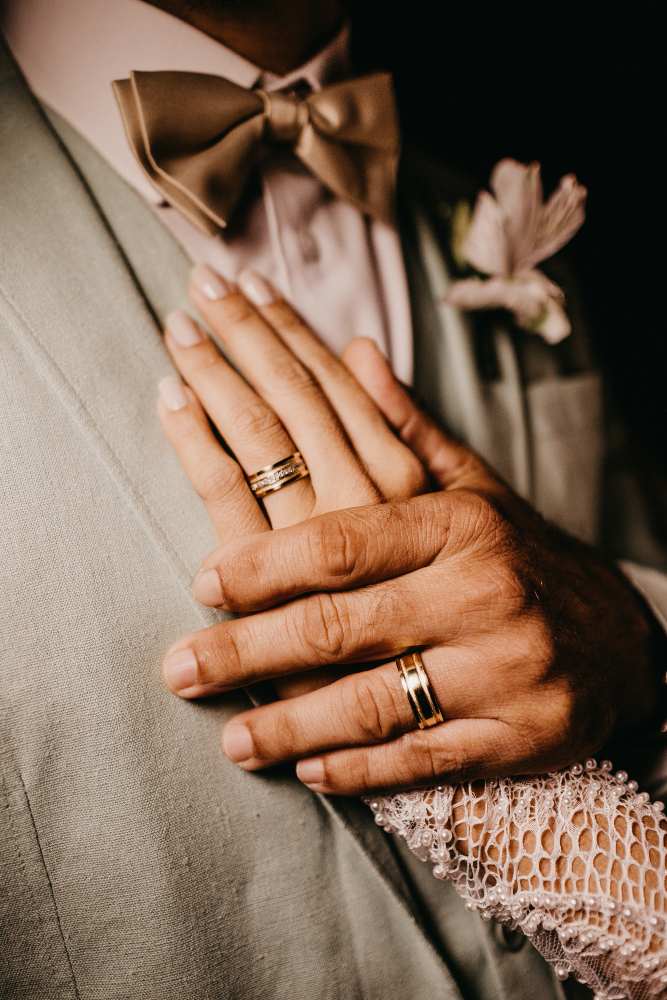



Your wedding ring gets to be on your finger every day after the wedding. It shows up in photos, is noticed at handshakes, and is worn through decades of ordinary life. The choice matters more than most people give it credit for.
Classic or modern, that’s the fork most couples hit eventually. Couples browsing wedding rings in St. Louis will find everything from plain yellow-gold bands with genuine heritage to matte titanium rings with laser-etched geometric patterns. Both are valid and have trade-offs, but knowing what actually separates these two categories makes it easier to land on something you’ll still love in twenty years.
What Defines a Classic Wedding Ring
The staying power of classic rings comes down to restraint—simplicity, durability, and a quiet kind of meaning that doesn’t need explaining.
Plain metal bands are where classic design starts. Yellow gold has been the default for centuries, with rose gold stepping in during periods when warmer tones returned to fashion. These bands are smooth, usually free of texture or stones, and they sit neatly next to an engagement ring without competing for attention. That’s not a limitation; it’s the whole point.
Milgrain detailing shows up often in classic styles, too. It’s the tiny bead-like edging that runs along the band’s border, a technique with roots in Edwardian and Art Deco jewelry. It adds texture without weight, character without clutter. And comfort-fit interiors, with their slightly domed inner surface, have remained popular for practical reasons: they’re just easier to wear over the long term.
One thing worth noting is that classic rings tend to use higher karat gold, 18k or 22k, which produces a richer, warmer color. The downside is that softer metals are more prone to scratching. Most people who’ve worn one for years don’t mind. The patina becomes part of the ring.
What Defines a Modern Wedding Ring
Modern design starts from a different premise. The question isn’t “What has always worked?” but “What works for this specific person?”
Alternative metals are probably the most visible shift. Tungsten, titanium, and cobalt chrome have carved out a significant market share thanks to their scratch resistance, solid weight, and relatively low cost compared to precious metals. Tungsten in particular maintains a polished finish for an extremely long time. That’s a real selling point for people who don’t want to think about maintenance.
Mixed-metal rings are another modern signature worth understanding. Pairing white gold with rose gold, or setting platinum against yellow gold, creates contrast that plain bands can’t offer. Two-tone rings often combine brushed and polished sections, or introduce matte finishes alongside high-shine areas, so there’s actual visual depth rather than just a surface treatment.
Stones in bands are also more common now than they were in traditional design. Eternity bands, which run stones all the way around the ring, have become a legitimate wedding band choice rather than just an anniversary gift. Channel settings and pavé work both keep the profile streamlined while adding sparkle that a plain band simply won’t have.
Then there are engraving rings, which are possible thanks to laser technology by putting genuinely intricate patterns on a ring surface, wood grain textures, geometric inlays, custom motifs, things that hand engraving couldn’t produce with this level of detail or consistency.
How to Decide Between the Two
Start with your actual life, not your aesthetic.
If you work with your hands, do physical labor, or just tend to be rough on things you wear, a plain band holds up better than anything with surface stones or raised detailing. Stones can loosen over time with regular impact, regardless of how well the ring was set.
How the band sits next to your engagement ring matters, too. A clean solitaire usually pairs well with an understated band. A halo or side-stone engagement ring can actually carry a thicker modern band better than something too delicate.
Here’s the thing about modern metals, though: tungsten and titanium can’t be resized. That’s a real consideration for anyone whose ring size might change over time. Classic precious metal bands are almost always resizable, giving them a practical edge that most people don’t think about until they need it.
Then there’s personal taste, which ultimately overrides everything else. Some people want a ring that connects them to something older than themselves. Others want one that looks like it belongs to their life right now, not a tradition they never felt tied to. Both are reasonable starting points.
Both Styles Have Their Place
Calling this a competition misses the point. Classic and modern rings reflect two different ways of thinking about time: one values continuity, the other values self-expression. They’re just different answers to the same question.
Plenty of couples end up mixing them anyway, with one partner in a traditional gold band and the other in a contemporary alternative metal band. The ring doesn’t need to match your partner’s; it needs to match you.
Whether that’s an 18k yellow gold band with a faint milgrain edge or a matte titanium ring with a geometric inlay, the right choice is the one you’re still comfortable wearing on an ordinary Tuesday thirty years from now.
Written by: Mick