




A memorable engagement does not have to begin with a plane ticket, a private rooftop, or an elaborate restaurant reservation.
Sometimes the most meaningful place to ask one of life’s biggest questions is the place where your relationship already feels most like itself: home.
An at-home engagement gives you privacy, control, and the freedom to build the day around the two of you. You can choose the music you actually listen to, display photographs from your relationship, prepare a dinner you both love, and leave room for the moment to unfold without an audience.
If cooking is part of the plan, keep it special without making it stressful. A countertop oven such as the Typhur Sync Oven can become part of the evening by handling the main course while you finish the table, get ready, or focus on your partner instead of spending the entire night watching the oven. You can also explore more cooking inspiration from Typhur when planning a menu that feels personal to the two of you.
The goal is not to fill every hour with surprises. It is to create a natural progression toward one unforgettable moment.
Here is how to make the entire engagement day feel thoughtful from beginning to end.
Start With Your Partner, Not the Pinterest Board
Before choosing flowers, candles, or a dinner menu, think about the person you are proposing to.
Would they love walking into a dramatically transformed room, or would something intimate and understated feel more like them? Would they want photographs of the proposal? Would they immediately want to call family, or would they prefer an hour alone together first?
The answers should shape the experience.
Choose two or three things that are genuinely connected to your relationship. That might be the wine you ordered on your first anniversary, the playlist from a favorite road trip, a dessert from your regular date-night spot, or photographs from places you have traveled together.
Those details create personality without requiring every corner of the house to become a proposal backdrop.
A thoughtful proposal should feel designed for your partner, not simply designed to photograph well.
Give the Day a Beginning, Middle, and Main Moment
The proposal itself may last only a few minutes, but the day around it can make the memory feel much richer.
You do not have to reveal that anything unusual is happening first thing in the morning. Instead, add one small detail that makes the day feel good without immediately giving away the surprise.
Make their favorite breakfast. Leave a short note somewhere they will find it. Plan an afternoon activity you already enjoy together.
Then allow the evening to become the focal point.
This pacing matters because an engagement day should still feel like time spent together—not a schedule of activities your partner has to complete before reaching the ring.
Build anticipation gently.
Transform One Area Instead of the Entire House
You do not have to redecorate your whole home to make it feel different.
Choose one area where the proposal will happen and make that space intentional.
Clear away everyday clutter first. Then think about lighting, flowers, candles, photographs, and the view your partner will have when they enter the room.
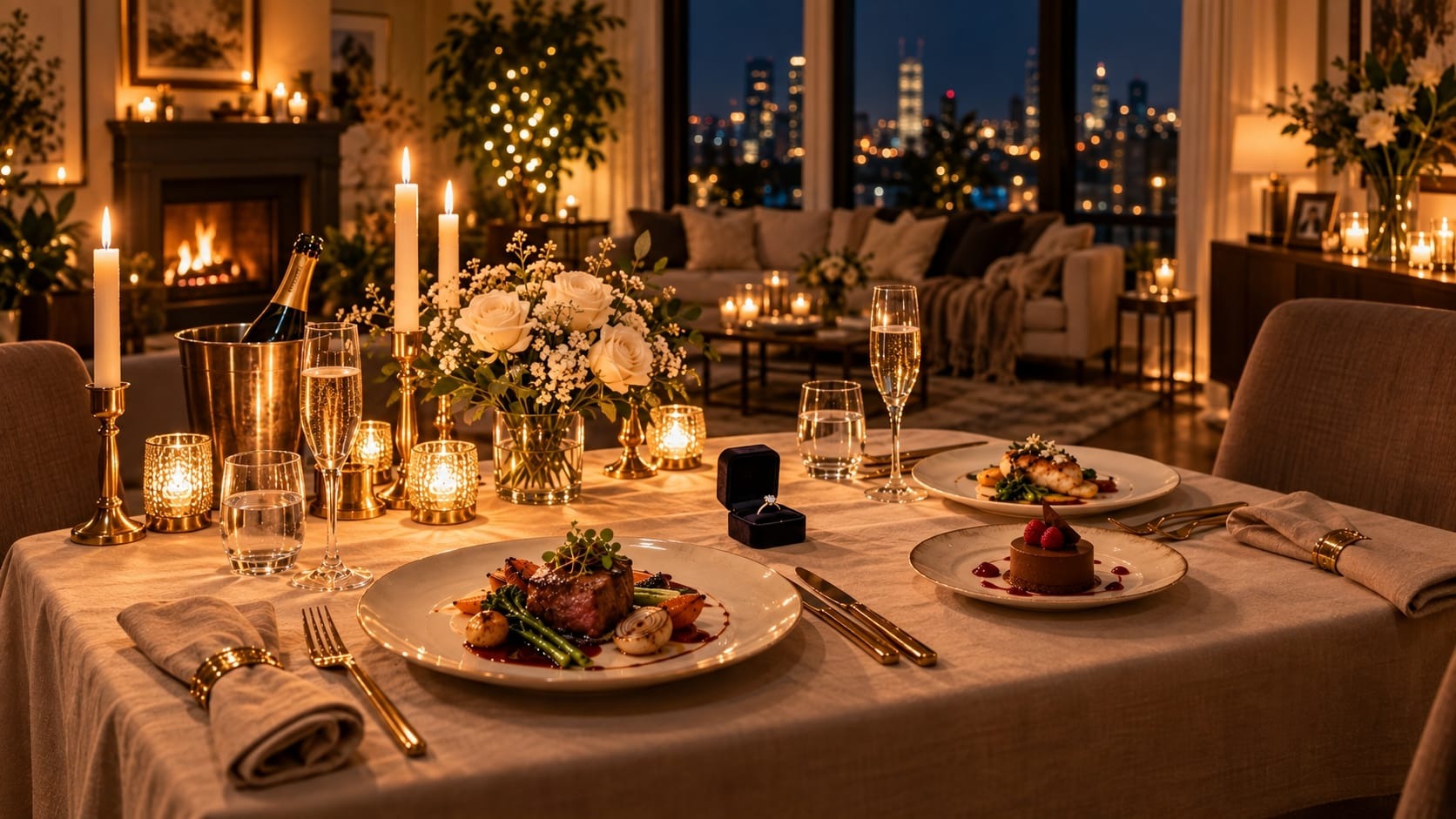
Soft lamps and candlelight can instantly change a familiar living or dining space. A few meaningful photographs often say more than dozens of generic decorations. Flowers can frame the proposal area without making the room feel like an event venue.
If there is one feature your partner already loves—a fireplace, balcony, window view, dining table, or backyard—use it as the foundation rather than covering it up.
Your home does not need to become unrecognizable.
It should feel like your home on one particularly beautiful night.
Build Dinner Around the Experience
Dinner can be one of the most personal parts of an at-home engagement, but it should not become the part of the evening that causes the most stress.
Keep the menu focused.
One main course, one or two uncomplicated sides, and dessert are usually enough. Choose food you feel comfortable preparing rather than attempting the most technically demanding recipe you can find simply because the occasion feels important.
If you are using the Typhur Sync Oven, a main course that can roast while you handle the final proposal details is an especially practical choice.
For example, an oven-baked salmon can pair easily with roasted vegetables, potatoes, or a fresh salad.
If your relationship is more cozy Sunday dinner than restaurant tasting menu, a lemon garlic roasted chicken can feel just as special.
The menu should reflect the two of you.
There is no rule saying an engagement dinner has to involve filet mignon, champagne, or anything else that does not normally feel like you.
Prepare Dessert Before the Evening Gets Emotional
Dessert deserves a little strategic planning.
Once the proposal happens, there is a very good chance neither of you will be interested in returning to the kitchen to start measuring flour.
Choose something that can be finished ahead of time and waiting for you after the “yes.”
Cake, pie, chocolate-covered strawberries, or a favorite bakery dessert can all work.
If you want to make something yourself, a dessert such as pecan pie can be prepared ahead so dessert is already handled when it is time to celebrate.
Add a bottle of champagne, sparkling wine, or another favorite drink and have the glasses ready.
The goal is to make the moments immediately after the proposal feel effortless.
Decide When the Proposal Happens Before You Plan the Meal
There is no universal rule saying the proposal must happen before dinner, after dessert, or exactly at sunset.
But you should decide the general timing before planning everything else.
If you know you will be too nervous to sit through an entire dinner with a ring in your pocket, propose earlier. You can then enjoy the meal as your first celebration together as an engaged couple.
If your partner loves a slow, romantic dinner and would enjoy the anticipation of the evening, you might save the proposal for later.
What matters most is that the timing fits your personalities.
Once you choose the moment, work backward.
If the proposal happens before dinner, have the table largely ready and choose a meal that will not require constant attention afterward.
If it happens after dinner, complete as much cooking, cleanup, and room preparation as possible beforehand so you are not disappearing into the kitchen between courses.
Give yourself more time than you think you need.
A proposal should never feel as though it is waiting on a kitchen timer.
Think About What Happens Immediately After “Yes”
People spend so much time planning the question that they sometimes forget to plan the next ten minutes.
Those minutes can be some of the sweetest part of the entire experience.
Do not rush them.
Let yourselves talk. Open champagne. Put on the song you chose. Sit together and look at the ring. Have dessert.
Then decide what comes next.
Maybe both families are waiting for a video call. Perhaps close friends are arriving later for another surprise. Or maybe the best plan is keeping the evening completely private.
If you are inviting anyone afterward, give yourselves a buffer before they arrive.
The newly engaged couple should have a chance to experience the moment together before becoming hosts.
Capture the Moment Without Turning It Into a Production
If photographs matter to your partner, plan for them.
A professional photographer can discreetly capture an at-home proposal if there is a practical place for them to position themselves. Another option is to arrange photographs immediately afterward rather than trying to secretly document every second.
If you are using your own camera or phone, test the framing, lighting, storage, and battery beforehand.
Then forget about it.
The proposal itself should never become a performance for the camera.
Some of the most meaningful photographs may come afterward anyway—the first toast, the phone call to family, the two of you sitting together in the home where you just decided to get married.
Have a Backup Plan Even When You Are Staying Home
Being at home removes some uncertainties, but not all of them.
Flowers can arrive late. Dinner can take longer than expected. Your partner can come home earlier than planned. The weather can make the patio unusable.
Identify the details that actually matter and the ones you can let go.
If dinner is delayed, have a simple appetizer ready.
If you planned an outdoor proposal, prepare an indoor version of the same setup.
If one decorative detail fails, do not rebuild the evening around fixing it.
Your partner does not know the exact proposal you imagined in your head. They will experience the version that actually happens.
Leave enough flexibility to enjoy it.
Let the Home Become Part of the Story
One of the most beautiful things about an at-home engagement is what happens after the day is over.
The room goes back to normal. The candles disappear. The dishes get washed. Eventually, the flowers leave the table.
But the place remains.
The couch becomes the couch where you called your parents after getting engaged. The dining room becomes the room where you had your first dinner as fiancés. A familiar corner of your home suddenly holds one of the biggest memories in your relationship.
That is why creating a thoughtful engagement-day experience at home is not about competing with an elaborate destination proposal.
It is about intention.
Choose details your partner will recognize. Make the room feel special without losing what makes it yours. Prepare a meal you can actually enjoy together. Leave time for the moment after the question.
And when everything is ready, stop adjusting the flowers, stop checking the table, and stop worrying about whether every detail is perfect.
Go be there for the part you will both remember.
Written by: Anil Baswal