




Choosing an engagement ring can involve more decisions than you expect. You want something your partner will enjoy wearing long after the proposal. That makes finding the perfect engagement ring all about understanding the person who will wear it. Their jewelry, lifestyle and preferences can guide you toward a thoughtful choice. When you balance those details with your budget and proposal plans, the ring can become a natural part of a moment that feels personal to both of you.
Understand Their Style Before You Start Shopping
Their everyday jewelry choices often provide better clues than current engagement-ring trends. Someone who usually wears delicate gold pieces may prefer a slim band and understated stone, while a person drawn to vintage jewelry might appreciate intricate details or an unusual setting.
Consider their routine as well. If your partner works with their hands or rarely removes jewelry, a lower-profile ring can catch less frequently on clothes and equipment. You can also involve someone they trust. A close friend or sibling may know about designs your partner has saved or mentioned, helping you narrow your search without ruining the surprise.
Choose a Stone, Shape and Setting That Suits Them
Diamonds remain popular, but sapphires, rubies and other gemstones can provide attractive alternatives when they suit your partner’s taste. Think about durability alongside appearance because an engagement ring often faces years of daily wear.
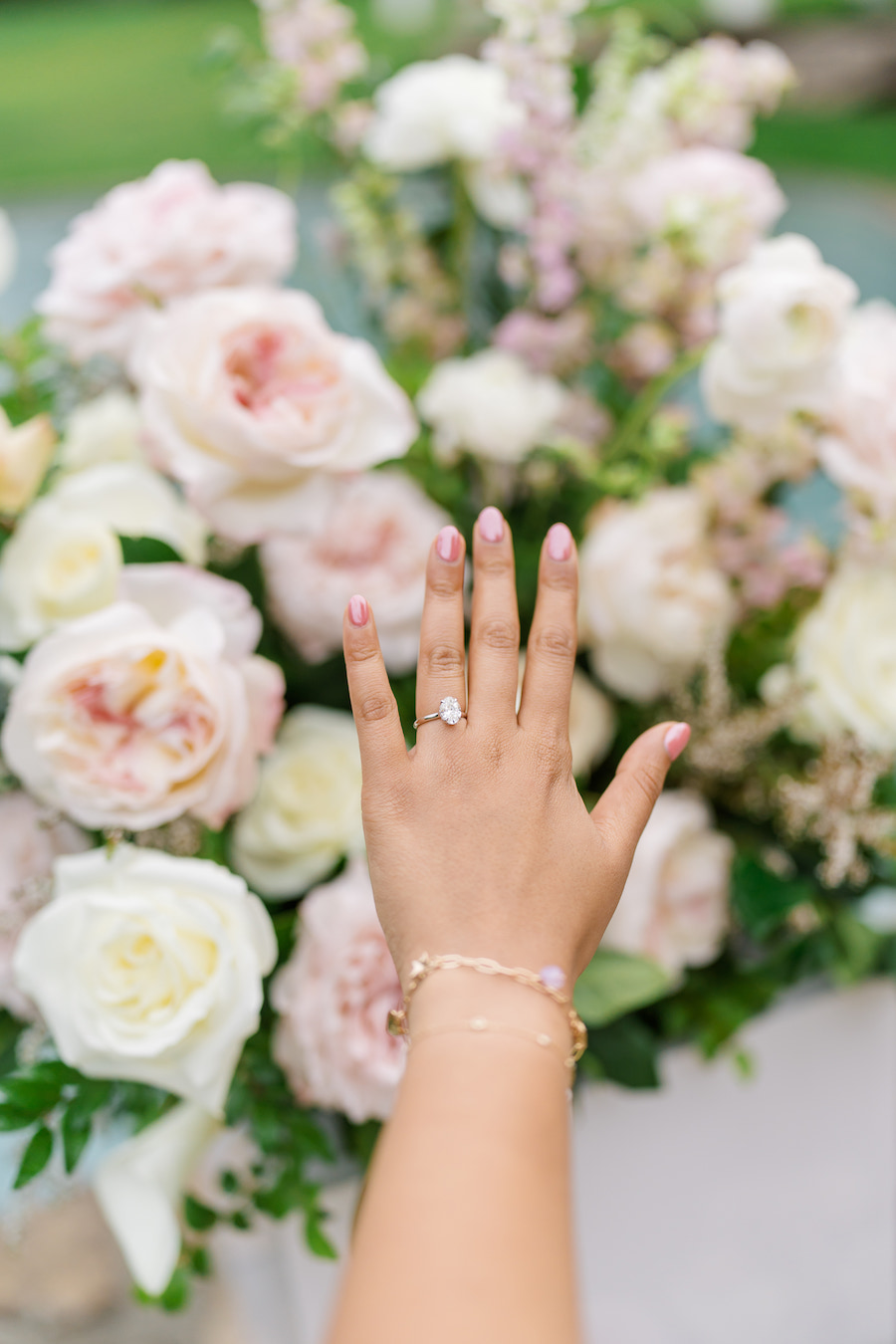
Shape can change the ring’s overall character. Round stones create a traditional appearance, while oval and marquise shapes can look elongated on the finger. Compare stones of similar dimensions in person, when possible, since carat weight alone does not tell you how large a stone will appear.
Setting matters too. Bezel settings surround the stone with metal, providing additional protection, while prong settings expose more of it.
Decide Whether Natural, Lab-Grown or Bespoke Feels Right
Natural and lab-grown diamonds have essentially the same chemical and physical properties, but they differ in origin and pricing. A lab-grown diamond may let you choose a larger stone or allocate more of your budget to the setting. Your partner, however, may place greater value on the geological origin of a natural diamond.
Compare options within a fixed budget instead of increasing your spending whenever you see a higher specification. Ask about independent grading reports and examine how each stone looks rather than focusing solely on numbers.
Bespoke jewelry can work well when you want something highly personal. For instance, a jeweler might reset a family gemstone in a modern band. Custom designs take additional time, so discuss production schedules early.
Plan the Proposal Around the Ring and the Moment
Your proposal should reflect your relationship. A private person may appreciate a quiet evening or meaningful location, while a partner who loves celebrations might enjoy seeing family and friends afterwards.
Store the ring securely, consider suitable insurance, and allow time for resizing before the proposal date. If you travel with it, keep it safely in your hand luggage rather than checked baggage. Simple planning reduces the chance that you spend an important moment worrying about where you put the box.
Choose Something That Feels Like Them
A meaningful engagement ring doesn’t need to meet somebody else’s definition of perfection. What matters is whether your choices reflect how well you know the person wearing it. Their habits and tastes can tell you everything you need to know.
Give yourself enough time to compare options without rushing and spend where the differences genuinely matter. When the proposal arrives, the ring should feel like a lasting reminder of the decision you are making together.
Written by: Stephanie