

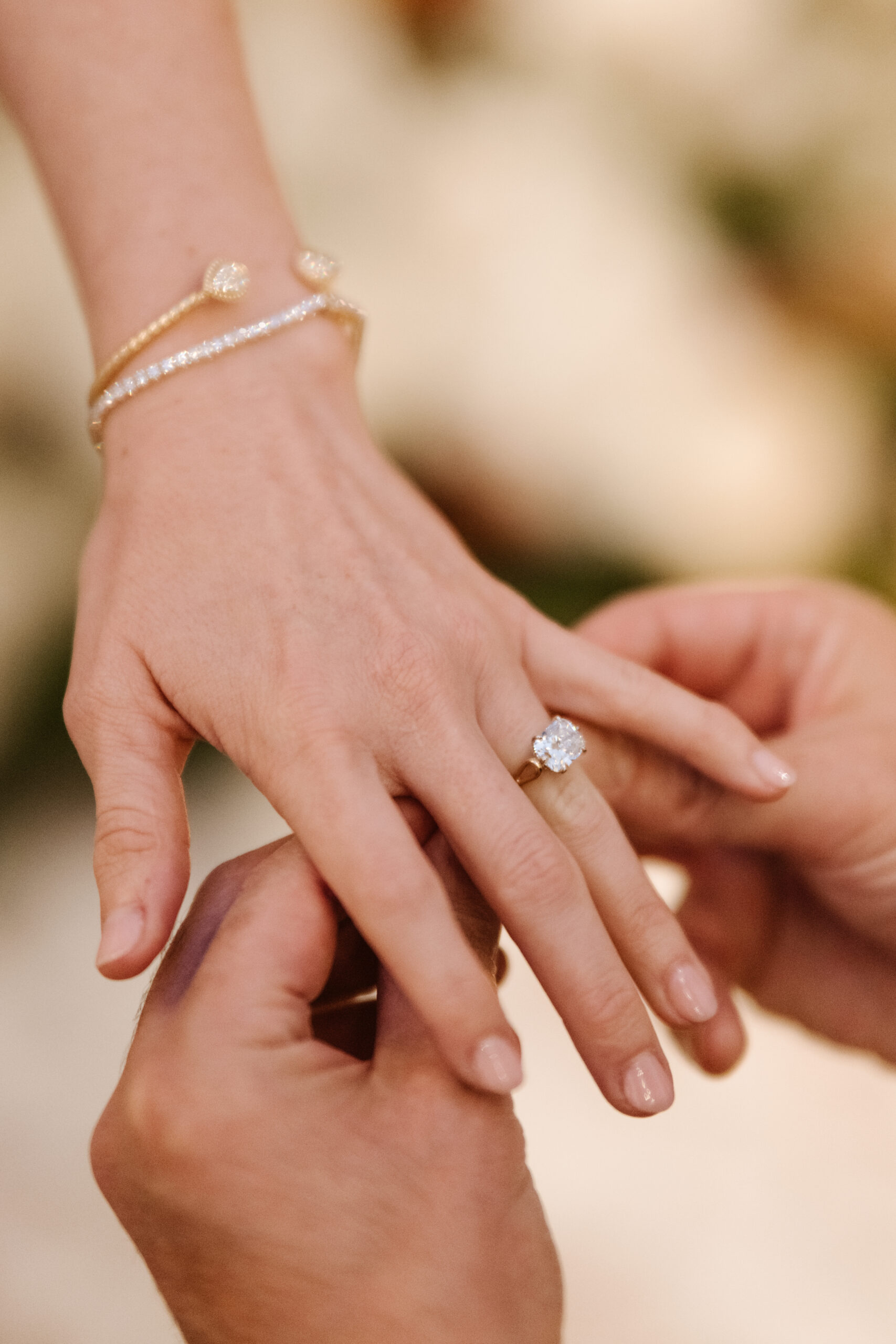


The ring close-up is usually the first proposal photo anyone asks to see. It lands in the group chat within minutes, and a version of it often ends up on the engagement announcement.
A round diamond throws the kind of sparkle a phone camera catches easily, while an oval can look a size bigger on the same hand, so shape is worth thinking about well before the big day.
How each shape looks on camera
The prices below are October 2026 medians for a natural 1-carat diamond with G color and VS1 clarity, from the Diamond Price Index. The Index checks Blue Nile, Brilliance, Rare Carat and Ritani every month.
| Shape | On camera | Natural, 1 carat | Lab-grown, 1 carat |
| Round | Lots of sparkle, even in a quick phone shot | $3,419 | about $340 (90% less) |
| Oval | Reads larger on the hand and lengthens the finger | $3,635 | about $440 (88% less) |
| Cushion | Soft, glowing sparkle with a vintage feel | $2,085 | about $420 (80% less) |
Round brilliants are cut to bounce back as much light as possible. They sparkle from nearly any angle, which helps even when a friend grabs the shot fast and a little off-center.
Oval stones cover more of the finger, so a 1-carat oval usually looks like a bigger stone in a hand shot. Ask the jeweler for a video first. Some ovals have a dark band across the middle called a bow-tie, and close-ups make it obvious.
Cushion cuts give a gentler glow that suits candlelit or golden-hour proposals, and at $2,085 the 1-carat cushion cost about $1,300 less than a round (October 2026 prices). Check the measurements before you buy, because some cushions are cut deep, which means the same carat weight may appear smaller face up.
Emerald and other step cuts flash in long bands of light. They photograph beautifully in clean, bright settings, though inclusions show easily in them, so it’s worth paying for higher clarity.
Getting the ring shot right
- Clean the ring first. Hand lotion and fingerprints dull a diamond fast, so give it a wipe with a soft cloth before the photos.
- Find some sun. Direct light makes a diamond sparkle. Open shade or golden hour is kinder to skin, so photographers usually shoot a few of each.
- Relax the hand. Curve the fingers slightly and tilt the hand toward the light. A flat, palm-down pose tends to look stiff.
- Shoot close and wide. Get a tight shot of the ring, then one that shows where it all happened.
- Bring in a photographer. Many proposal planners include one in their packages, and a pro knows how to catch the sparkle without blowing out the highlights.
A stone that photographs well for less
- Spend on cut first. Cut decides how much a diamond sparkles on camera, so put the cut grade ahead of a slightly bigger carat weight. Most online retailers post high-magnification photos and 360-degree videos, so use them to see how the stone handles light. On ovals, pears and marquise shapes, look for a bow-tie, the dark band across the middle.
- Compare measurements. Two stones of the same weight can face up at different sizes, and the millimeter figures on the grading report show which one looks bigger.
- Look at lab-grown. In October, 1-carat lab-grown stones cost 80% to 90% less than natural ones of the same grade, and in photos (and in person too without tools) nobody can tell the difference.
- Check more than one retailer. The same certified diamond often appears on several sites at different prices. This fall, the same 3-carat oval was listed $7,000+ apart at two retailers. Use a tool like Diamond Watcher to search the major online retailers together, so you can easily compare diamond prices, natural or lab-grown.
Prices are October 2026 median listing prices for G color, VS1 clarity diamonds at Blue Nile, Brilliance, Rare Carat and Ritani, from the Diamond Price Index. Prices change monthly.
Sources
Written by: Mobeen Ahmad