




A centerpiece can look beautiful on a sample table and feel completely different once the reception room is full. Daylight can flatten candlelight. A large ballroom can make a small floral arrangement disappear. The right centerpiece starts with the room guests will actually experience, not with a single inspiration photo.
Florals and candles solve different design problems. Flowers bring visible color and shape to a table even before the reception lighting changes. Candles become far more expressive as the room gets darker. A restrained table can look complete with pillar candles for wedding styling, while another reception may need flowers to give the room enough visual presence from the moment guests arrive.
Most weddings benefit from deciding which element should do the heavier design work rather than forcing both into equal roles. A daytime garden reception may need very little additional floral volume because the surroundings already provide it. An evening dinner in a dark interior can often lean further into candlelight. The stronger choice comes from reading the room first and styling the tables around it.
Start With the Room Before Choosing the Centerpiece
Natural light changes how much visual work a centerpiece needs to do. At an afternoon reception, candle flames can become a small detail rather than the dominant effect couples imagined. Flowers hold their color in bright conditions, which gives them a stronger presence before sunset. Once the room becomes darker, the balance can reverse and candlelight begins to shape the atmosphere around the table.
Scale deserves the same attention. A compact arrangement may look elegant on a styled tabletop but feel undersized beneath a high ceiling. Long dining tables can carry repeated pools of candlelight beautifully, while a small round table may need only one strong floral gesture. The goal is proportion, not maximum decoration.
This is also the right stage to think about quantity. If candlelight will repeat across most guest tables, a bulk wedding candles order can make consistency easier and may simplify purchasing. Confirm the venue rules first. Some event spaces restrict exposed flames or require specific holders, so buying candles before checking the policy can leave you with a design you can’t use as planned.
Florals Give the Table a Presence Candlelight Cannot
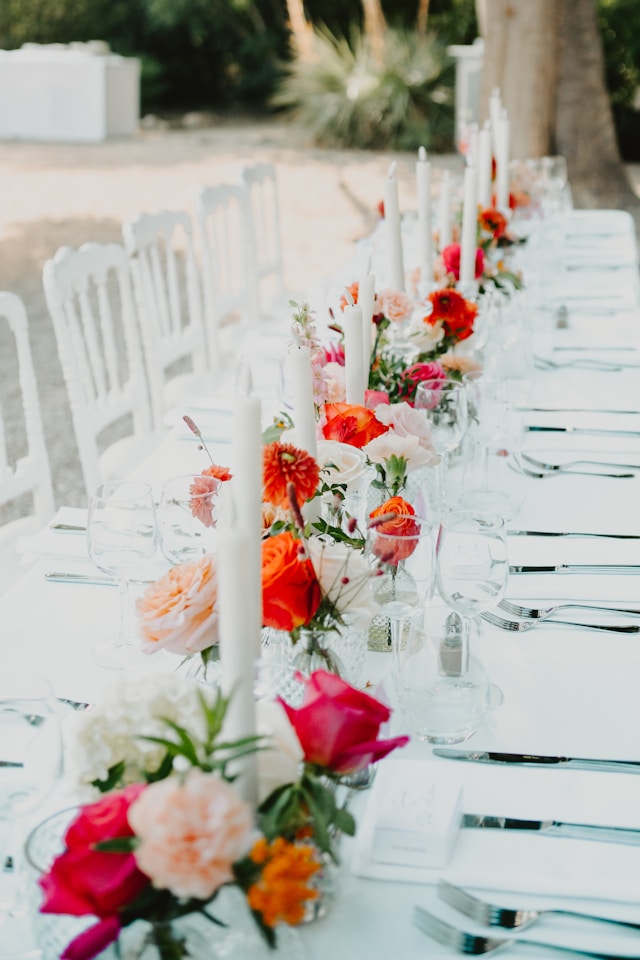
Flowers are especially effective when the centerpiece needs to be visible from across the room. They create shape in daylight and can connect the tables to the colors already established elsewhere in the wedding. A floral design can also change the perceived scale of a table without filling every open space.
That does not mean every floral centerpiece needs to be lush. A few deliberate stems can feel more refined than a dense arrangement when the table already has strong linens or decorative place settings. Seasonal availability can influence the final design, so it is often more productive to discuss the desired shape and feeling with a florist than to insist on recreating one exact arrangement from a photograph.
Florals also come with practical considerations that candle-heavy tables avoid. Large arrangements require careful transport and setup, and delicate flowers can react poorly to heat. Strongly scented varieties need thought around dining tables because fragrance close to the meal can become distracting. These are design decisions rather than reasons to avoid flowers. A good florist can adjust the arrangement to the room and season.
Candlelight Works Best When the Reception Lets It
Candle-heavy tables earn their impact after the light level drops. Once dinner moves into evening, even a simple centerpiece can gain depth from repeated flames reflected through glass. The table feels warmer without a large object at its center, which works particularly well when conversation across the table is part of the desired atmosphere.
The common assumption that candles are automatically the less expensive choice deserves some caution. Wax itself may cost less than elaborate florals, but a finished candle design can require holders and additional setup. A large reception may also need substantial quantities before the room looks intentionally candlelit rather than sparsely decorated. Comparing complete designs gives a more useful budget picture than comparing a candle with a flower stem.
Venue policies vary, and local fire requirements can affect what is permitted. Some spaces allow candles only when the flame is protected inside an appropriate container. Others may prohibit open-flame decor in certain settings. Flameless candles are an alternative when real flames are unavailable, although their color temperature and flicker quality should be tested in the actual reception lighting before ordering large quantities.
Let the Table Shape Decide How the Design Repeats
| Consideration | Floral-Heavy Centerpieces | Candle-Heavy Centerpieces |
| Best Lighting | Strong in daylight because color and shape remain clearly visible. | Most effective in evening settings where the flame can influence the room’s atmosphere. |
| Round Tables | A centered low or medium arrangement creates a clear focal point without blocking conversation. | A compact candle grouping works well around the center and keeps the tabletop visually open. |
| Long or Rectangular Tables | Repeated smaller arrangements create rhythm without placing too much visual weight in one spot. | Candles can run along the length of the table and create continuity from one end to the other. |
| Sweetheart Tables | Extra floral volume can distinguish the couple’s table from surrounding guest tables. | A denser concentration of candlelight can create a softer focal area around the couple. |
| Large Reception Rooms | Flowers provide stronger visual presence from across the room. | Candles may need to be used in greater numbers to avoid looking sparse in a large space. |
| Guest Conversation | Low arrangements keep sightlines open; tall designs need enough clearance above eye level. | Low-profile candles generally preserve clear views across the table. |
| Overall Effect | Best when the tables need visible color, shape, and decorative presence throughout the reception. | Best when warmth, intimacy, and evening atmosphere are the main priorities. |
Use Both When Each Has a Clear Job
Florals and candles often work best together when one is clearly dominant. If flowers are carrying most of the color and shape, candlelight can add warmth without competing for attention. On a candle-led table, smaller floral arrangements can keep the design from feeling bare during daylight without reducing the evening effect.
Balance doesn’t need to follow a fixed percentage. A 60/40 split may work for one room and look arbitrary in another. Spend according to the visual problem you are trying to solve.
The strongest centerpiece plan also allows some variation across the room. Guest tables do not need identical arrangements to feel coordinated. One group can carry a little more floral volume while another relies more heavily on candles, provided the overall scale and styling still relate. This approach can make a large reception feel more natural and can help direct the budget toward tables where extra decoration will actually be seen.
Written by: Dina Summers