



A satin dress might look right for a hotel reception, but what if the ceremony is outdoors, in January, on a gravel path? The dress itself is only part of the decision. You’ll also need to think about staying warm, walking comfortably, and dressing appropriately for the occasion.
Choosing winter wedding guest attire comes down to three things: the dress code on the invitation, the venue, and the weather you’ll actually face. A dress needs to work with all three, whether you’re attending an indoor ceremony or spending part of the celebration outside.
What Should You Check Before Choosing a Winter Wedding Guest Dress?
Start with the invitation. The stated dress code and the time of day help establish how formal the event will be, and a host’s specific instructions always outweigh general fashion conventions. Then find out where everything happens: is the ceremony indoors or outdoors, and is the reception in the same place or across town?
Weather comes next. Check the forecast a few days ahead, and think about how much time you’ll spend outside, whether that’s photographs, a walk between buildings, or waiting for a shuttle.
Once those answers are clear, browsing winter wedding guest dresses becomes easier. You can judge each option by its sleeve length, fabric weight, and hemline against the day you’ve actually mapped out rather than choosing on appearance alone.
How Does the Wedding Venue Affect Your Dress Choice?
The venue changes the practical side of your outfit more than you might expect.
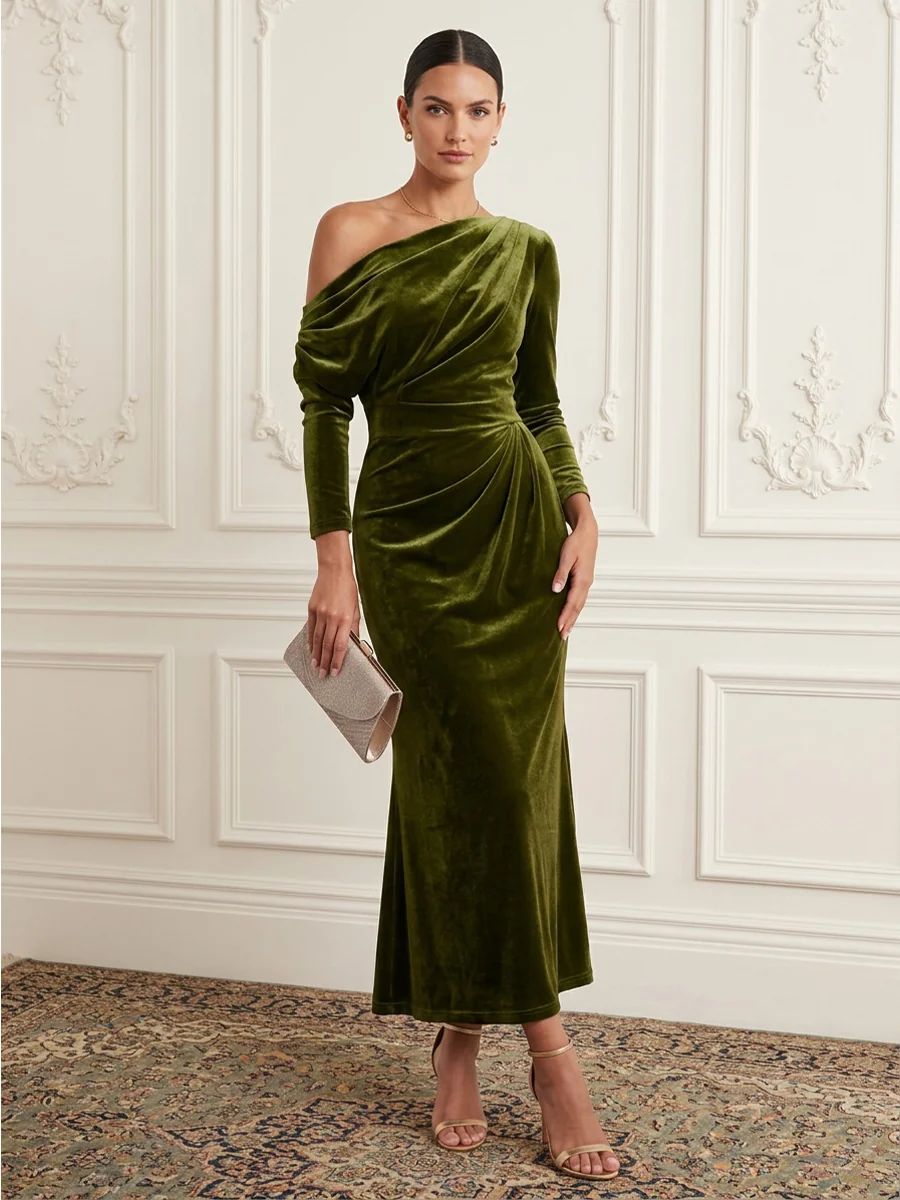
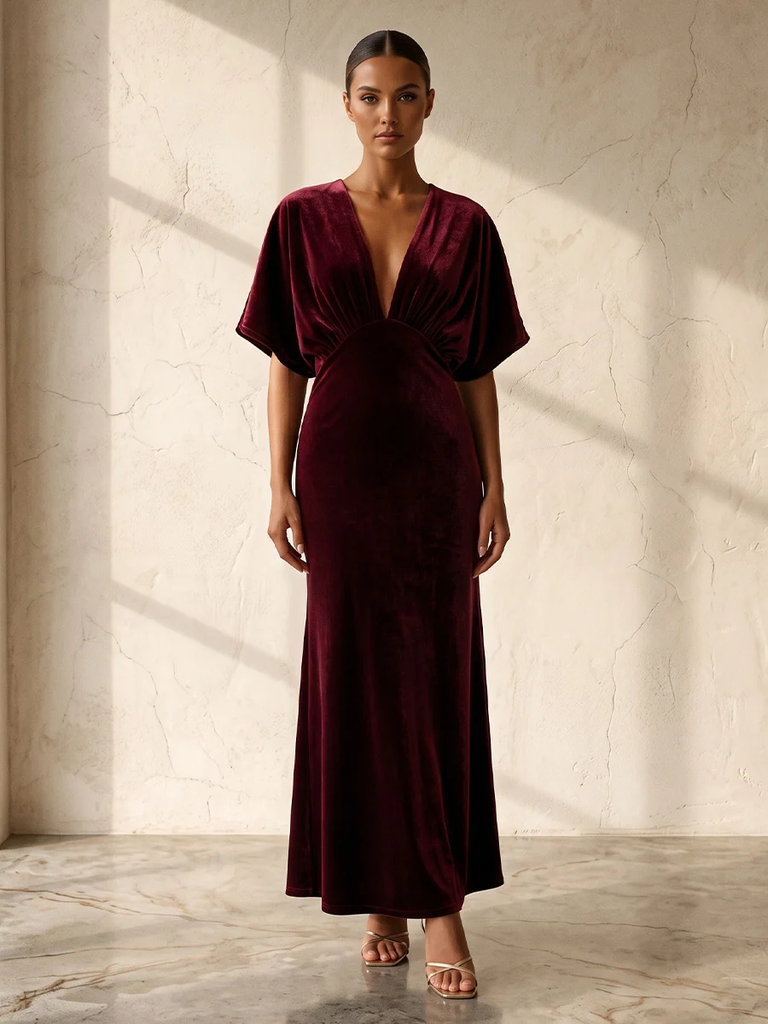
Hotel ballroom. An indoor reception usually means more controlled temperatures and even flooring, so the dress code can take priority over weather concerns. A satin or velvet gown can be right at home, depending on what the invitation asks for. You’ll still want a suitable coat for arriving and leaving.
Historic church or traditional ceremony. Some places of worship expect covered shoulders, and older stone buildings can be cool even when the day isn’t particularly cold. A removable wrap or a coat you can keep on during the service is a sensible addition. Not every church has the same conditions, so check with the couple or venue if you’re unsure.
Countryside barn or outdoor ceremony. Wind, cold ground, uneven paths, and wet grass all come into play. Closed-toe block heels or dressy ankle boots may be more practical than stilettos, although slippery surfaces still call for appropriate footwear with reliable traction.
Here’s how one dress might change. A midnight-blue crepe midi could pair with strappy heels and a light wrap in a ballroom. For a barn ceremony, the same dress works with block heels and a long wool coat, with a pair of dressier shoes in your bag for the reception.
What Should You Wear for Each Winter Wedding Dress Code?
Dress codes give you a range, not a single answer, and the details can vary by region and by couple.
Black-tie traditionally calls for a floor-length evening gown. Longer skirts and more substantial fabrics can also be practical during colder months, although you’ll still need appropriate outerwear if the ceremony involves time outdoors.
Formal generally means elevated eveningwear, often a long dress, though expectations can differ from one wedding to the next. When the invitation is unclear, a longer, more refined style is usually a dependable choice.
Cocktail is where you have more flexibility. A polished knee-length or midi dress usually fits, and some shorter styles can work depending on the cut and setting. Many cocktail dresses feature satin, jacquard, or embellished finishes that can suit this level of formality. Whether a particular dress is appropriate still depends on its overall design and the wedding itself, not simply the category it’s sold under.
Semi-formal often allows something a little more relaxed but still dressy, such as a refined midi dress. It overlaps with cocktail attire without being identical, and the time of day and venue help set the tone. An evening semi-formal wedding may call for a more polished outfit than an afternoon celebration.
Which Fabrics Work Best for a Winter Wedding Dress?
Weight, lining, and construction matter as much as the fabric’s name.
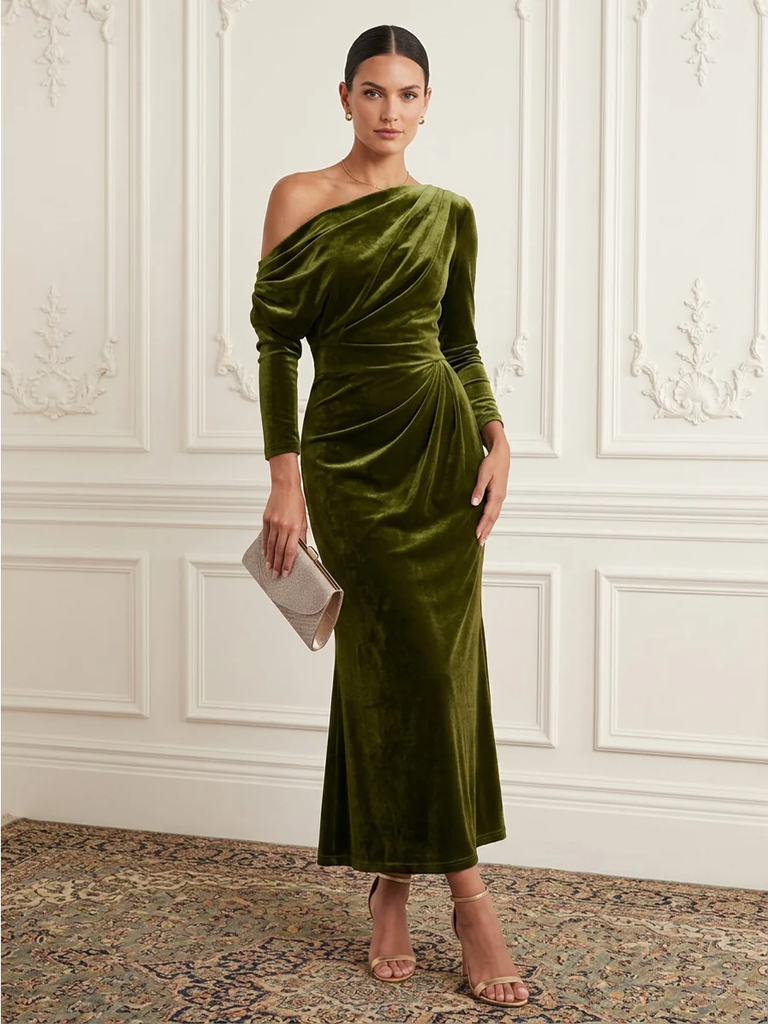
Velvet is a popular winter choice because of its rich texture, though how warm it feels depends on the fabric’s weight and composition. Structured crepe holds its shape and looks tailored, especially when lined. Satin has a refined finish but varies widely; a lightweight, unlined satin slip dress won’t provide much insulation simply because it’s satin.
Jacquard brings texture and body, while chiffon can still work when it’s properly lined and paired with suitable layers.
Consider the contrast. A lightweight satin dress can look beautiful, but it leaves you relying on your coat whenever you’re outdoors. A dress made from heavier velvet or substantial lined crepe may provide more coverage and warmth on its own.
That doesn’t rule out satin. With a proper coat and suitable underlayers, it can still be a good choice. And not every winter wedding dress needs long sleeves. Sleeve length is only one part of keeping comfortable.
How Can You Stay Warm Without Hiding Your Outfit?
A tailored wool or wool-blend coat is often the most useful outer layer, especially when you’ll spend time outside before or after the ceremony. It provides coverage without necessarily overwhelming the dress underneath.
Dressy wraps and shawls work well for indoor receptions or brief transitions between heated spaces, but a thin decorative wrap won’t offer much protection during a cold outdoor ceremony.
The amount of time you’ll spend outside should influence your choice. A short walk from the car to a hotel entrance calls for different preparation than standing through an outdoor ceremony or waiting for photographs in freezing weather. When deciding what to wear over a dress to a winter wedding, consider the ceremony setting, the dress’s shape, and whether your outer layer will be warm enough for the conditions.
Tights or a thin underlayer can help, particularly with shorter hems. Closed-toe shoes are also worth considering, though dressy footwear isn’t automatically suitable for ice or snow. For wet or slippery ground, choose shoes with appropriate traction and consider bringing a second pair to change into once you’re indoors.
What Colors and Accessories Work for Winter Wedding Guests?
Navy, burgundy, emerald, black, and deep plum are reliable winter colors. Muted metallic details, such as a gold-toned clasp or pewter clutch, can add interest without overwhelming the outfit.
Still, winter guests aren’t limited to dark shades. Soft dusty blue, rose, and sage can look just as appropriate, particularly for daytime weddings or lighter dress codes.
White, ivory, and other bridal-looking outfits are generally best avoided unless the couple has specifically requested them.
For a complete example, consider a navy crepe midi dress with a tailored long camel coat, closed-toe block heels, and a small evening bag with simple drop earrings. The coat provides a practical layer for a short outdoor ceremony, while the dress and accessories work well for an indoor reception.
Common Winter Wedding Guest Attire Questions
Can you wear a sleeveless dress to a winter wedding?
Yes, provided it suits the dress code and venue. A coat, wrap, or jacket can offer coverage outdoors or during a cooler ceremony, and you can remove it once you’re inside.
Is black appropriate for a winter wedding?
For many modern weddings, yes. A black dress can look polished and seasonally appropriate. Check the invitation and consider any cultural or family expectations before deciding.
Can you wear boots to a winter wedding?
Sometimes. It depends on the dress code, venue, and boot style. Sleek, dressy ankle boots can work for certain cocktail or semi-formal weddings, while black-tie events generally call for more formal footwear. If outdoor conditions are difficult, changing shoes indoors may be the most practical choice.
Final Check Before You Go
Reread the invitation, check the forecast, and think through how much time you’ll spend outside. Try the complete outfit together, including your shoes and coat, to make sure you can sit, walk, and move comfortably. A dress that suits the occasion and works with the conditions will let you focus on the celebration rather than adjusting your outfit all evening.
Written by: Muhammad Faraz